ERP Software for Managing Pharmaceutical Factories: Your Complete Guide to Excellence and Quality
In the pharmaceutical industry, where human lives intersect with scientific precision and regulatory compliance, there is a clear need for an integrated management system that leaves nothing to chance. Running a pharmaceutical factory is not just an ordinary manufacturing process; it is a journey that begins with raw materials and ends with a human life – and that is exactly what makes choosing the right management system a critical decision.
Why Is Managing a Pharmaceutical Factory Different?
When you run a pharmaceutical factory, you are not dealing with ordinary products. You are dealing with:
- Sensitive materials that directly affect human health
- Strict local and international regulatory systems
- Complex, multi-stage production processes
- Enormous ethical and legal responsibility
The Challenges a Specialized ERP System Solves
Complexity of Production Processes
This cycle is extremely complex, and its challenges can be summarized in three main points
- Complexity of the supply chain and quality control of inputs
- Complexity of manufacturing and control processes
- Complexity of documentation and regulatory requirements
- Integrated planning for all production stages
- Tracking every batch from start to finish
- Precise time management for changeovers between products
- Quality control at every step
Compliance with Regulations
Pharmaceutical factories are subject to strict oversight by the Ministry of Health and international bodies, which involves:
- Multiple and conflicting requirements
- High operating costs
- Severe penalties and risks
- Automatic updates of regulatory requirements
- Compliance reports ready for submission
- Complete documentation of all processes
- Early warning system for violations
Supply Chain Management
The quality of the final medicine depends on the quality of the raw materials, which requires:
- Selecting approved suppliers
- Monitoring material expiry dates
- Accurate inventory tracking
- Continuous evaluation of supplier performance
- Alerts for materials nearing expiry
- Management of storage conditions
- Optimization of inventory levels
Why We Recommend Investing in a Specialized ERP System
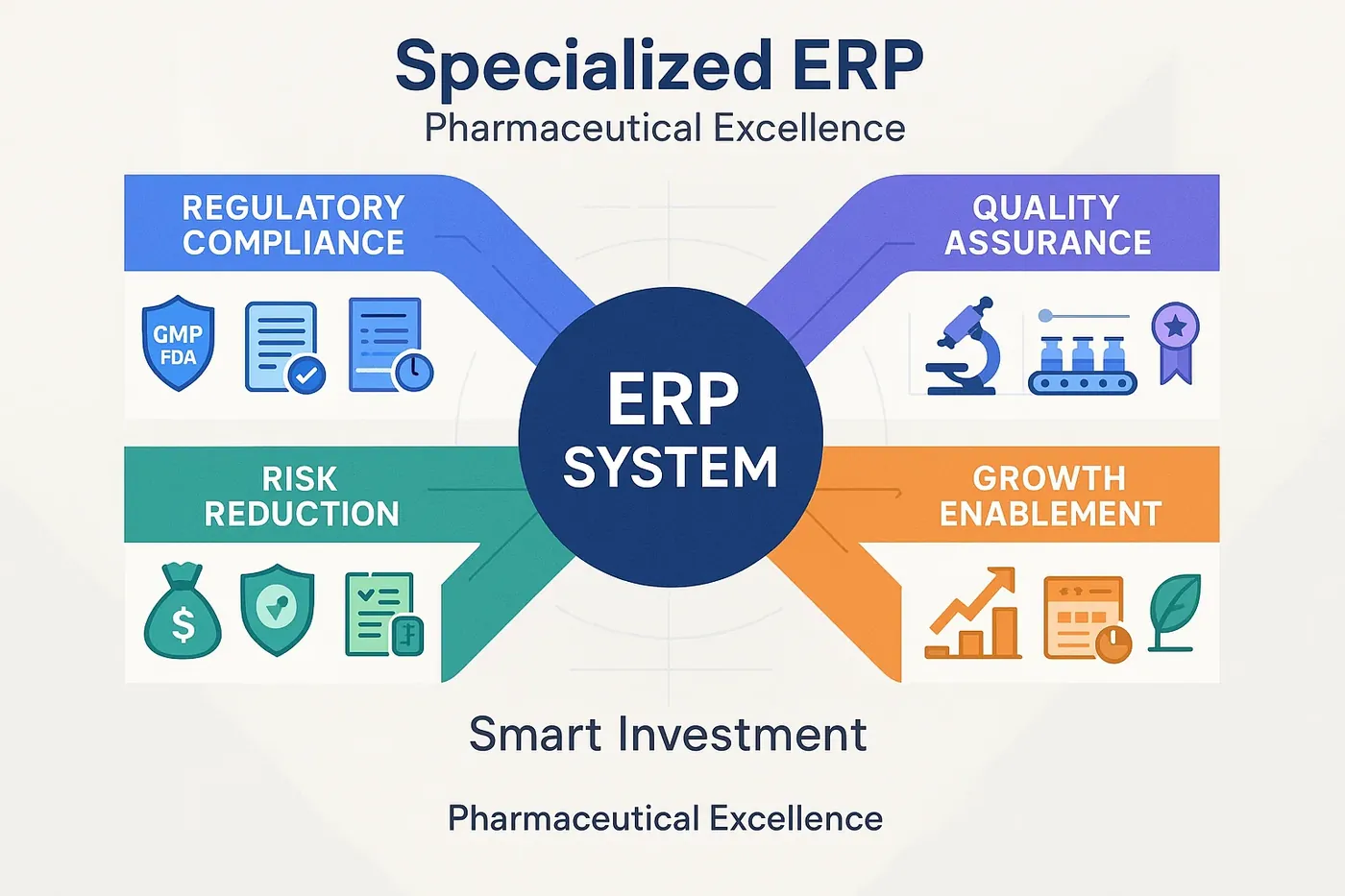
Because an ERP system in the pharmaceutical sector is not a luxury; it is
A regulatory necessity – ensuring compliance with regulations
A safe investment – reducing risks and fines
A quality guarantee – protecting the reputation of your products
A tool for growth – expanding with confidence and sustainability
A regulatory necessity – ensuring compliance with regulations
A specialized pharmaceutical ERP system connects all operations (production, quality, distribution, inventory) in one integrated system that complies with the regulations of the Ministry of Health and international bodies such as GMP and the FDA.
It helps you track every production batch, manage expiry dates, and document every step of the production chain accurately and auditably.
A safe investment – reducing risks and fines
Errors in recording production or expiry data can lead to fines or loss of license.
With a specialized ERP system, human errors are reduced through process automation, along with instant alerts whenever permitted limits are exceeded.
The result: your company is protected from unexpected losses and can continue operating with confidence.
A quality guarantee – protecting the reputation of your products
The system enables comprehensive quality management from raw materials through to the finished product.
You can track laboratory test results, issue instant quality reports, and ensure that every product leaving the factory meets specifications.
The result: market confidence and a stable reputation with customers and distributors.
A tool for growth – expanding with confidence and sustainability
When the factory expands or new production lines are added, an ERP system makes it easy to manage resources and plan production.
It gives you a comprehensive view of all operations, making it easier to take strategic decisions based on accurate data.
In other words, it is the foundation that allows you to grow in an organized and sustainable way without losing control over quality or efficiency.
How Does ERP Improve the Efficiency of Pharmaceutical Factories?
- Integrating data from all departments into a central system that provides a comprehensive real-time view.
- Automating production and planning processes to reduce errors and speed up the manufacturing cycle.
- Improving inventory management to reduce waste and ensure material availability without overstocking.
- Supporting strategic decision-making based on accurate data and advanced analytics.
Components of the Ideal ERP System for Pharmaceutical Factories
- Production management: planning and scheduling manufacturing operations with high precision.
- Quality management: inspecting and monitoring quality at every stage.
- Inventory management: tracking raw materials and finished products.

- Finance and accounting: tracking costs, revenues and financial reports.
- Supply chain management: coordinating purchasing and distribution efficiently.

- Human resources: organizing employee data, payroll and training.
Why Choose Alfa Software Solutions for Managing Pharmaceutical Factories?
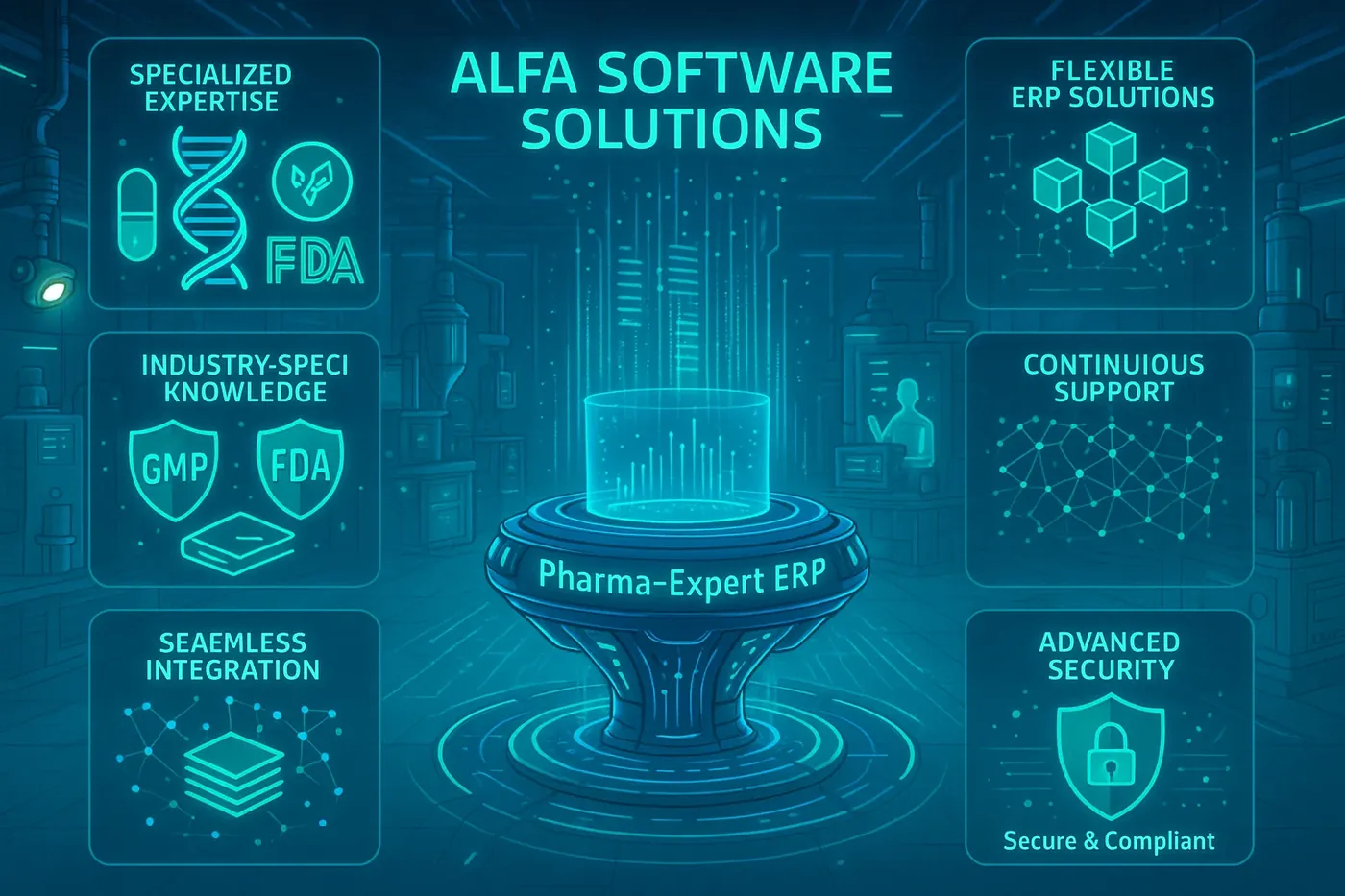
- Specialized expertise in the pharmaceutical sector with a deep understanding of factories' needs and regulatory requirements.
- Flexible, customizable ERP solutions that suit factories of different sizes.
- Ongoing technical support and consulting services to ensure a successful system implementation.
- Seamless integration with other systems to provide an integrated and effective working environment.
- Commitment to the highest standards of security and protection of sensitive data.
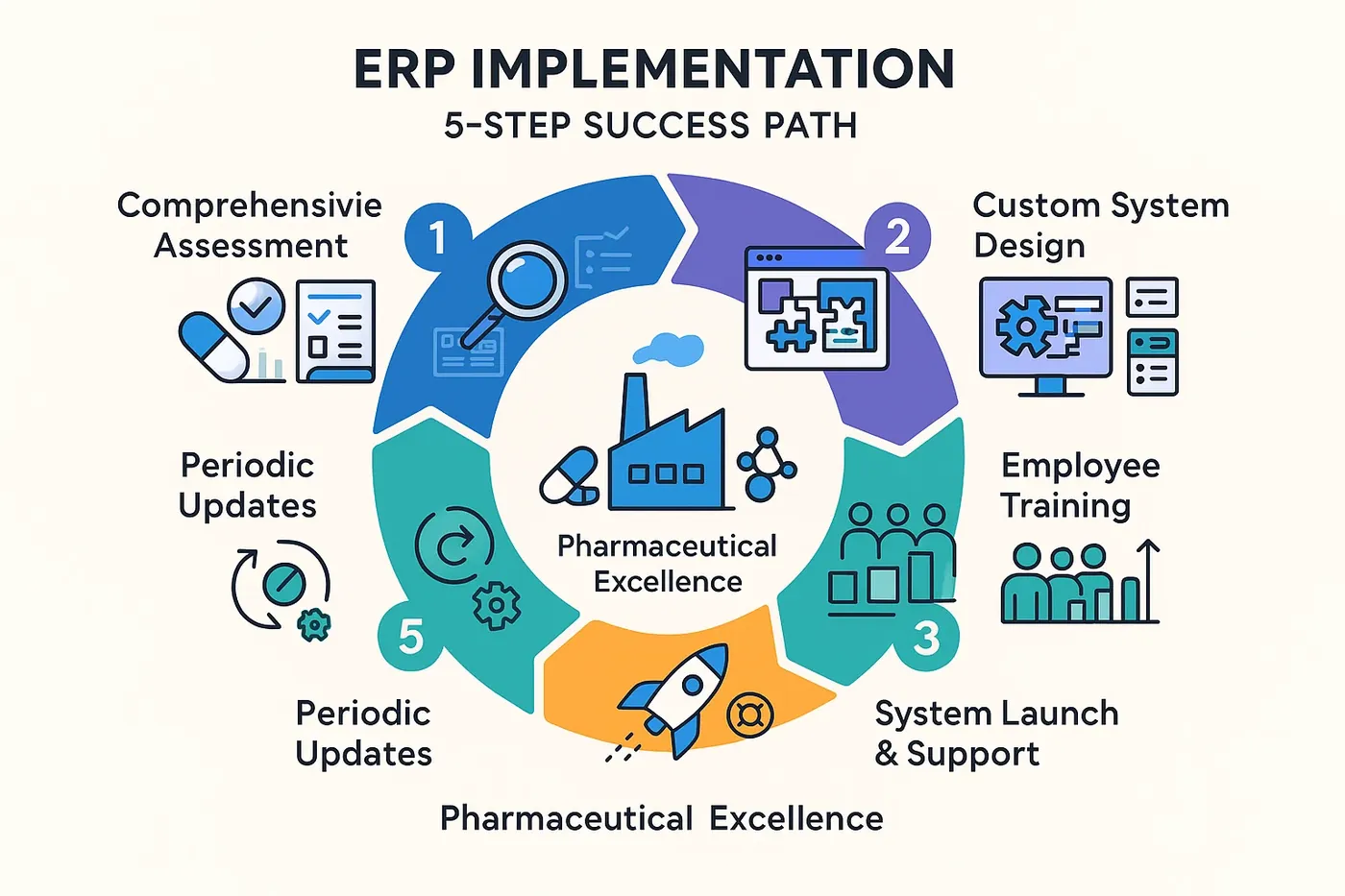
Steps to Successfully Implement an ERP System in a Pharmaceutical Factory
- A comprehensive assessment of the factory's needs and current processes.
- Designing and customizing the system to fit the factory's specific requirements.
- Training employees to ensure the system is used efficiently.
- Launching the system with continuous follow-up and technical support to resolve any challenges.
- Regular updates to keep pace with technical and regulatory developments.
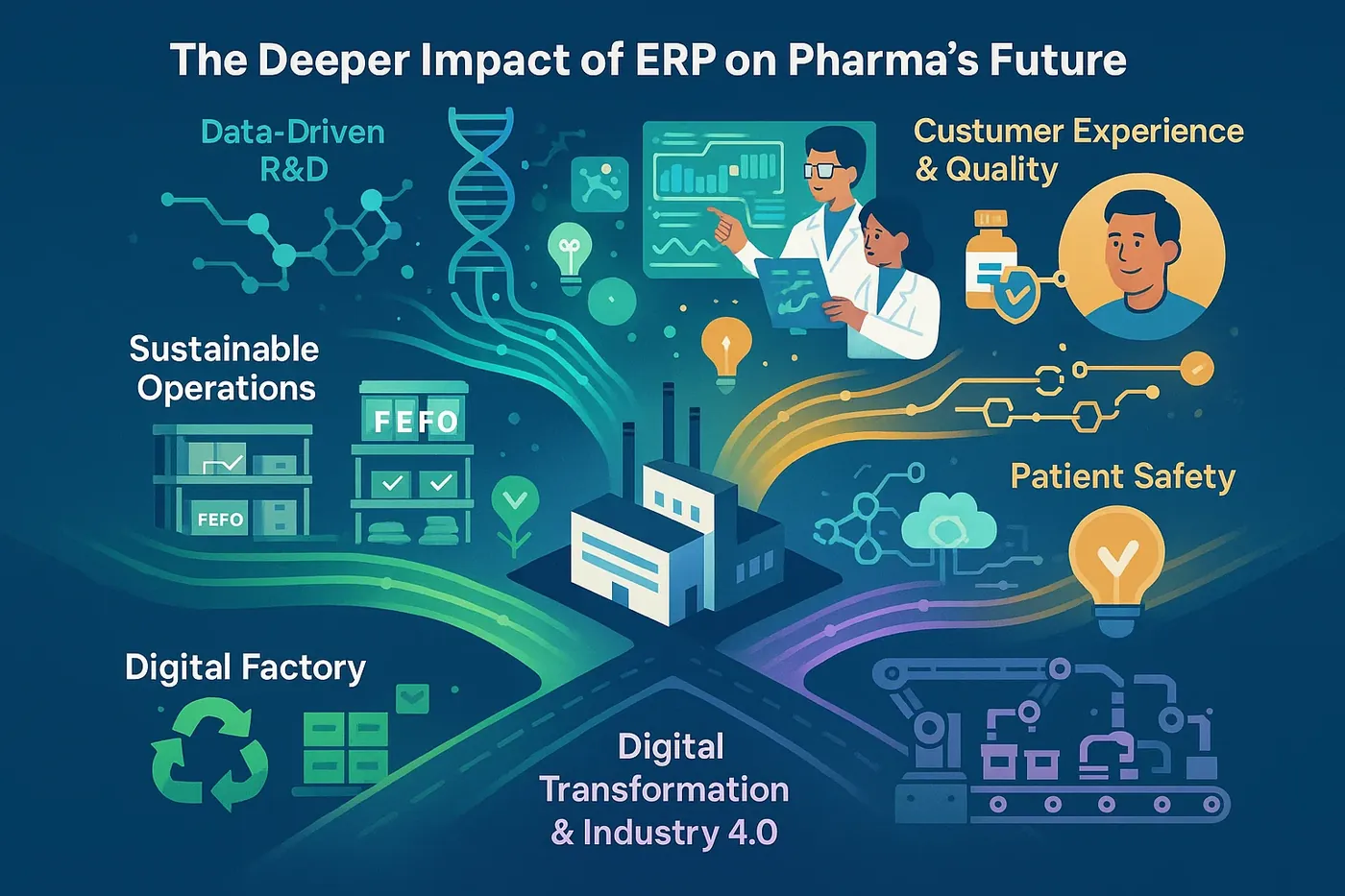
How Will ERP Shape the Future of the Pharmaceutical Industry?
- Enabling innovation by providing accurate data that supports research and development.
- Promoting sustainability through better resource management and reduced waste.
- Supporting the complete digital transformation of factories towards Industry 4.0.
- Improving the customer experience through faster response and product quality.