
Why Losing a Sales Opportunity Means a Bigger Loss Than You Think
- Every lost sales opportunity means a loss of immediate profit and a chance to build a long-term relationship with the customer.
- Losing sales affects your company’s reputation and reduces the trust of current and potential clients.
- In a competitive market, every missed opportunity gives your competitors an advantage over you
The Real Reasons Behind Losing Sales Opportunities
- Product unavailability or insufficient stock at the right time.
- Poor communication with the customer and not accurately understanding their needs.
- Lack of a clear and organized sales process for your team to follow.
- Rushing the customer or giving up too early without proper follow-up.
- An inconvenient purchasing experience, such as long waiting times or lack of information.
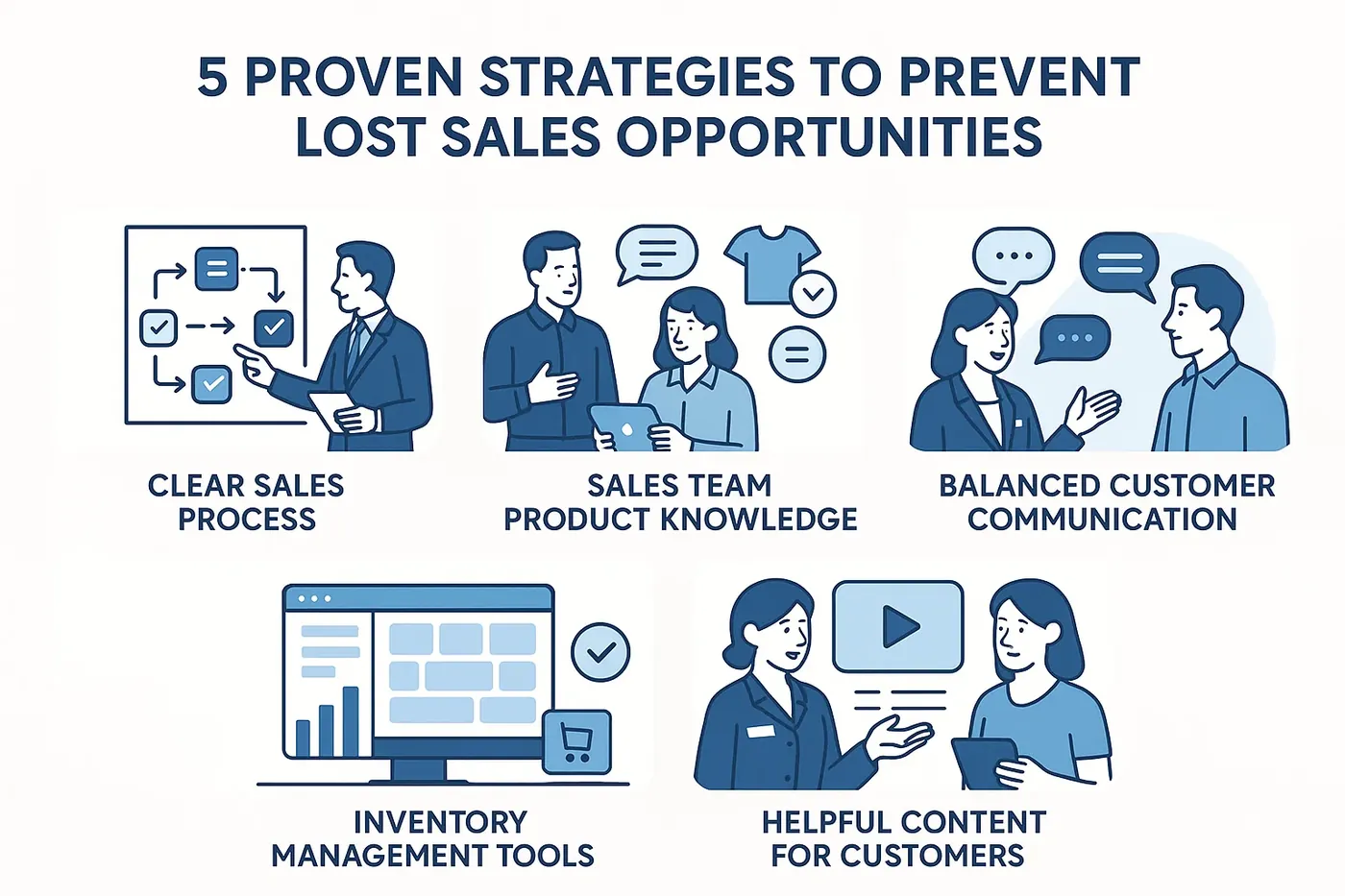
How to Prevent Losing Sales Opportunities: 5 Proven Strategies
- Build a clear sales process: Document the sales steps and define touchpoints and follow-ups.
- Enhance the sales team’s product knowledge and understanding of customer needs.
- Use inventory management tools to ensure the required products are always available.
- Maintain consistent and balanced communication with customers: Avoid pressuring or giving up too quickly.
- Provide helpful content that answers customer questions and alleviates concerns before purchase.
Success Stories: How Companies Turned Lost Sales Opportunities into Huge Gains
- Alpha Company improved its inventory system, reducing losses by 30% within 6 months.
- Beta’s sales team implemented an organized follow-up process, increasing their deal closure rate from 20% to 45%.
- Gamma Store used educational content on its website, boosting customer loyalty and reducing cart abandonment.
Don’t Miss a Sales Opportunity Again
- Treat every sales opportunity as a valuable treasure.
- Invest in training your team and tools.
- Listen to your customers and be patient in following up.
- Remember: every lost opportunity is a lesson to improve next time