
Digital transformation for businesses Kickstart your digital transformation
In a world of rapid technological advancement, digital transformation is no longer a luxury for organizations—it’s a vital necessity for survival and competitiveness in the market.
What is digital transformation, and why has it become important for your business?
Digital transformation is the process of radically integrating digital technology across every area of your business, changing how operations run and how value is delivered to customers. It’s not just about buying newer computers or launching a website; it’s a comprehensive shift in your organization’s culture, processes, and entire business model.
In today’s digital era, companies that lag in adopting modern technologies risk falling behind competitors and losing market share. Evolving customer expectations, rapid technological advances, and volatile market conditions demand that organizations become more agile and adaptable.
How can digital transformation revolutionize your business?
Increase operational efficiency and productivity
By automating repetitive tasks and processes, you can streamline workflows, allocate resources more effectively, and reduce manual errors. Real-time analytics and accurate data simplify operations, enabling you to make well-informed decisions very quickly.
Improve customer experience and satisfaction
Digital transformation empowers you to deliver exceptional customer experiences. With personalized, targeted marketing strategies, you can engage customers more deeply and offer products and services tailored to their needs. Seamless omnichannel experiences ensure consistent interactions across all touchpoints.
Make smarter, data-driven decisions
Digital transformation gives you access to vast amounts of data and advanced analytics tools, allowing you to make data-driven decisions. By harnessing big data, you gain valuable insights into customer behavior, market trends, and operational performance.
Reduce costs and optimize resource usage
Digital transformation creates major opportunities to cut costs and increase resource efficiency. By automating and optimizing processes, you can significantly lower operating expenses. Efficient resource allocation boosts productivity and minimizes waste.
How to start the digital transformation journey in your company?
Set goals and define the strategy
Successful digital transformation always starts with a clear vision and measurable objectives. Ask yourself: What do I want to achieve with digital transformation—better customer service, higher sales, or lower costs? Clearly defined goals are the first step toward a successful transformation.
Assess the current state and set priorities
Pause to evaluate where you are now: Which processes can be automated? What technologies are you currently using? What are your strengths and weaknesses? The answers will help you identify the highest-priority areas for improvement.
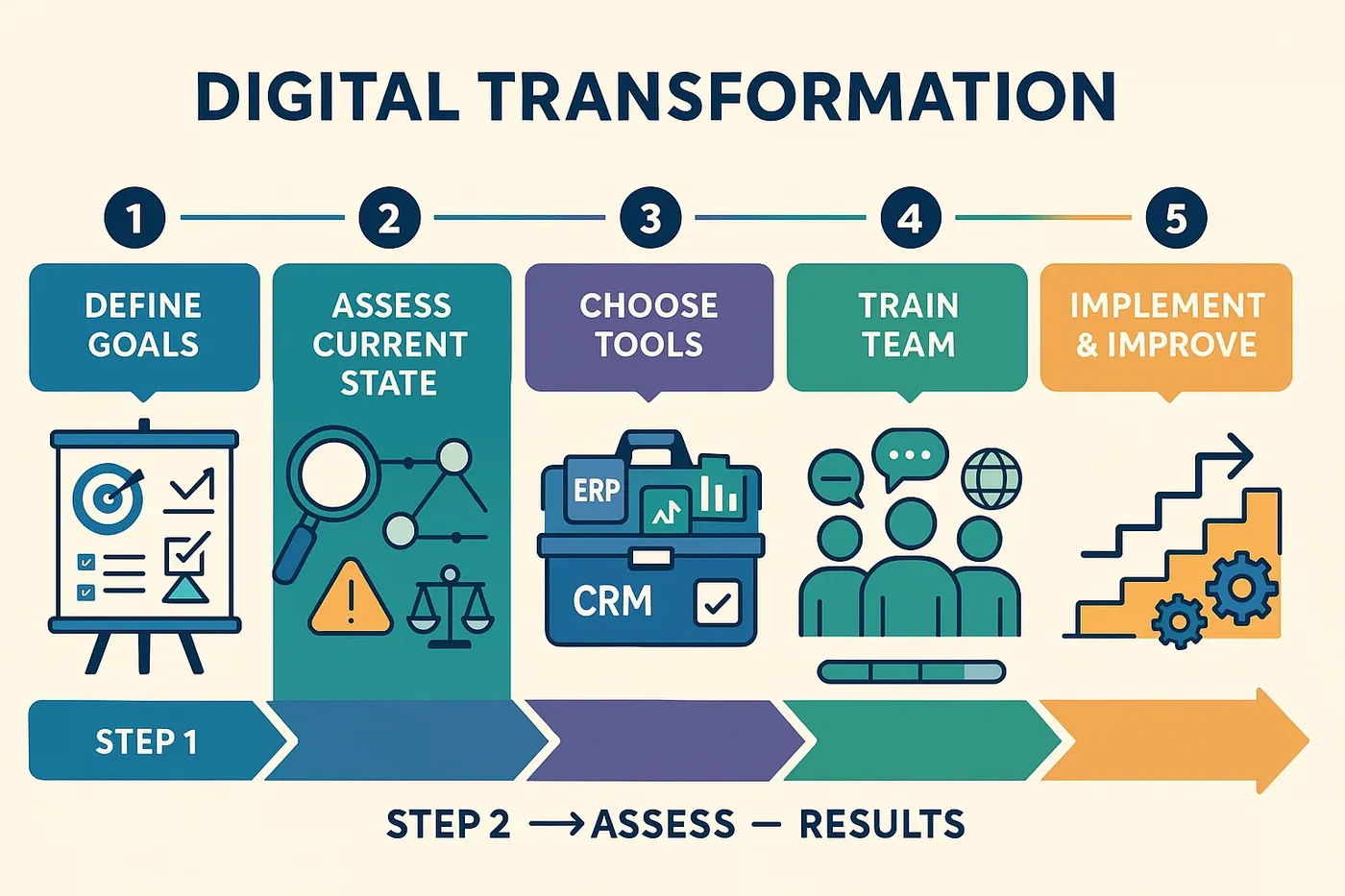
Choose the right tools and technologies
Based on your goals and needs, select tools and technologies that fit your business size and budget. These may include Enterprise Resource Planning (ERP) systems, Customer Relationship Management (CRM) platforms, and analytics/reporting tools.
Train the team and build a digital culture
One of the biggest challenges is employee resistance to change. Provide the training and support needed to help your team understand the importance of digital transformation and acquire the skills to work with new technologies.
Implement gradually and keep improving
Digital transformation isn’t an overnight journey—it’s an ongoing process. Start with small steps, measure the results, and use data for continuous adjustments and improvements. Phased implementation reduces risk and helps you learn from mistakes.
How can we support you on your digital transformation journey?
- With our extensive experience in software development and digital solutions, we’ve learned that every company has unique needs and distinct challenges.
- That’s why we take time to deeply understand your business and its specific requirements before proposing any solution.
- Throughout our journey developing software solutions for companies, we’ve seen the biggest shifts when technology is aligned with the company’s overall strategy.
- This means we don’t just deliver software—we provide an integrated solution that achieves your business objectives.
- Our work with many organizations shows that successful digital transformation rests on three core elements: people, processes, and then technology.
- When these elements are balanced and integrated, the results are tangible and lasting.
Frequently Asked Questions about Digital Transformation
- How long does digital transformation take?
Digital transformation is not a project with an endpoint — it’s a continuous journey of adapting to technological advancements. However, you can start seeing positive results within 3 to 6 months by focusing on high-priority projects. - What is the estimated cost of digital transformation?
The cost varies greatly depending on the company’s size and the scope of transformation. The key is to focus on tools that deliver direct ROI and choose flexible technological solutions that fit your company’s budget. - How can I overcome employee resistance to change?
Through continuous training, involvement in the planning process, and highlighting both individual and collective benefits of digital transformation. When employees see how digital tools make their work easier and improve their skills, resistance decreases significantly. - Can small businesses afford digital transformation?
Yes, there are affordable digital solutions for small and medium-sized enterprises. Many cloud-based tools offer flexible monthly subscriptions, making them accessible even for smaller companies
Start your digital journey today.
- Digital transformation is no longer a luxury—it’s a strategic necessity for any company that wants to survive and compete. Failing to go digital means falling behind and losing your competitive edge.
- The good news: getting started is simpler than you think. Begin with small steps, focus on a single area of your business, then expand gradually. What matters most is starting now—before the digital gap between you and your competitors becomes too wide.
- Don’t wait for the future—create it. Start your digital transformation journey today.